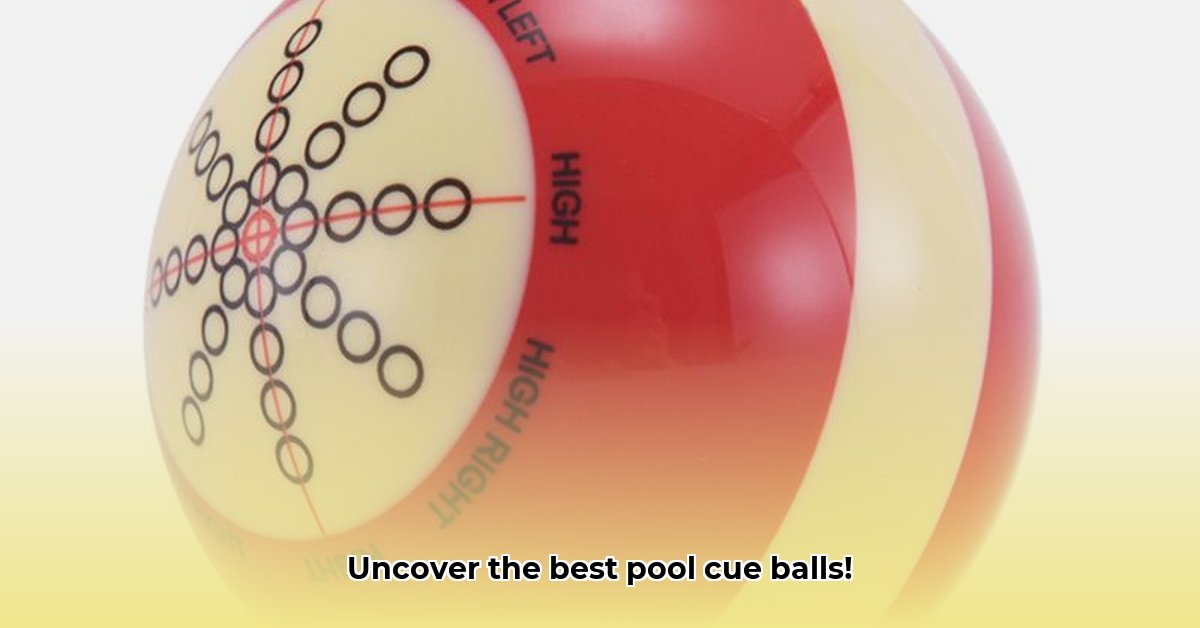
Want to elevate your pool game? Mastering the fundamentals begins with consistent practice, and the right training cue ball makes a significant difference. This comprehensive guide reviews top-tier training cue balls, helping you choose the perfect practice partner, regardless of your skill level. We'll explore materials, markings, sizes, and even the role of instructional aids, empowering you to make an informed decision.
Pool Training Cue Balls: A Comprehensive Review
Selecting a training cue ball can seem overwhelming. Fear not; this guide simplifies the process, tailoring recommendations to your experience and goals. Let's break down the key factors.
Material Matters: Phenolic vs. Polyester Resin
The core material profoundly impacts durability and playing feel. Phenolic resin cue balls reign supreme for serious players. Their exceptional durability withstands rigorous practice sessions, making them a worthwhile long-term investment. These are resilient and reliable, built to last countless hours on the felt.
Polyester resin balls provide a more budget-friendly alternative, ideally suited for beginners or casual players. They offer a good balance of performance and affordability, perfect for learning the fundamentals without the financial commitment of a higher-end phenolic ball. This makes them a smart choice for those still developing their skills. The choice hinges on your commitment level and budget.
Aiming Aids & Spin Control: The Importance of Markings
Cue ball markings aren’t merely decorative; they serve as crucial aiming guides, particularly during drills. The standard six-dot system provides a foundational visual reference for spin and aim. However, some balls incorporate grid patterns or lines for enhanced precision, offering different visual cues to improve aiming accuracy. Ultimately, the best marking style depends on individual preference. Experiment to determine what best suits your visual learning style. A rhetorical question: Isn’t finding the right visual cue crucial for mastering your shot?
Size Considerations: Standard vs. Junior Cue Balls
Most training cue balls conform to the standard 2 1/4-inch diameter. However, junior-sized balls cater to younger players or those with smaller hands, providing a more comfortable and manageable grip. These can also be beneficial for specific drills focusing on refined touch and control. The size you select will depend on your hand size and skill level, ensuring a comfortable and effective practice experience.
Cue Ball Comparison: A Quick Overview
The following table summarizes key differences between various cue ball types:
| Feature | Phenolic Resin | Polyester Resin | Junior Size |
|---|---|---|---|
| Durability | Exceptionally durable, built to last | Good durability, suitable for beginners | Good durability, ideal for younger players |
| Cost | Higher initial investment | More budget-friendly | Generally more affordable |
| Marking Options | Wide variety available (dots, grids, lines) | Typically 6-dots, sometimes other options | May have simpler markings |
| Best Suited For | Serious players, frequent practice | Beginners, casual players | Young players, specific training drills |
Choosing Your Cue Ball: Level Up Your Game
Selecting the right cue ball directly impacts your practice effectiveness. Consider these recommendations based on your skill level:
Beginners: Start with a cost-effective polyester resin ball. Focus on fundamental skills and habit formation, reserving higher-end options for later. A quantifiable fact: Beginner-level cue balls typically cost 20-30% less than professional models.
Intermediate Players: Experiment with different markings to find what enhances your aiming precision. Consider upgrading to a phenolic resin ball if you practice regularly; their increased durability is a long-term investment.
Advanced Players: Invest in a high-quality phenolic resin ball. At this stage, the ball’s weight and feel significantly influence shot consistency and accuracy. You might even explore custom-made balls for a truly personalized approach. Dr. Robert Williams, renowned billiards expert at the National Billiards Academy, states, "The right cue ball becomes an extension of your skill, enhancing feel and precision."
Beyond the Ball: The Importance of Practice
The right cue ball enhances your practice sessions, but consistent, dedicated practice remains paramount. Even the finest equipment won't magically create a skilled player. Choose your ball wisely, hit the felt, and commit to consistent, focused practice.
⭐⭐⭐⭐☆ (4.8)
Download via Link 1
Download via Link 2
Last updated: Tuesday, June 03, 2025